Overhead detailing
Vent faces, light housings, ledges, door tops and sprinkler escutcheons are cleaned before any lower surface is touched.
Serving Lansing, Michigan & surrounding areas
Mon–Fri 8am–6pm Sat 9am–2pm
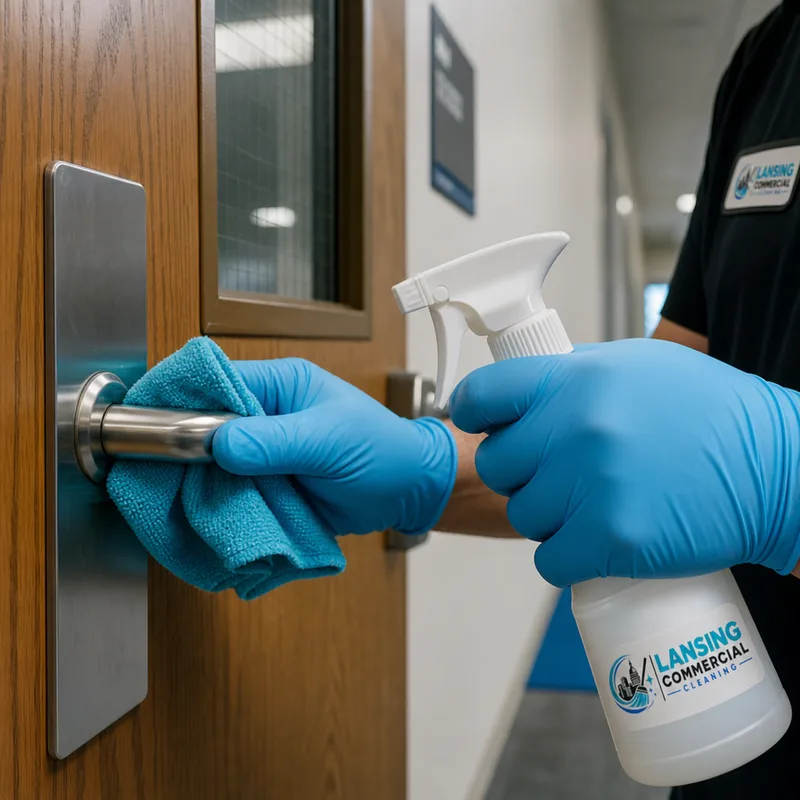
Periodic Facility Reset
Routine cleaning is built for speed and repetition, so it concentrates on the surfaces people touch and see at eye level. Everything above, behind and underneath accumulates quietly until a building starts to look tired even though it is cleaned on schedule. Deep cleaning is the periodic reset that reaches those places, and Lansing Commercial Cleaning books it as a standalone project or as a rotation layered onto recurring service.
Reach And Depth
Think of a deep clean as cleaning in three dimensions rather than across a surface. Overhead there is a list of its own: vent and diffuser faces, light fixture housings, sprinkler escutcheons, door frame tops, partition tops, ledges, pipe runs and ceiling corners. At floor level and below: baseboards, chair and table legs, caster wheels, the backs of waste receptacles, floor edges where a mop never quite reaches, and the sides of equipment pushed against a wall. Then the detail work in between, which is switch and outlet plates, blind slats, interior glass and frames, window tracks and sills, cabinet interiors, grout lines, upholstered seating, appliance interiors and the gaps behind refrigerators and vending machines where dust and spills collect.
Why Now
Four situations drive most of these projects. The common one is a fixed date, where an inspection, an audit, a leadership visit or a client tour sets a standard and a deadline together. Turnover is another, whether a tenant is leaving a suite or a new one is taking it, since neither party wants to inherit the other's residue. Seasonal resets suit buildings that take a beating for part of the year, with spring clearing out winter salt and the dust of a sealed-up facility. Then there are managers who simply recognize that a space has drifted, usually when complaints are vague and nobody can point to a task that was missed.
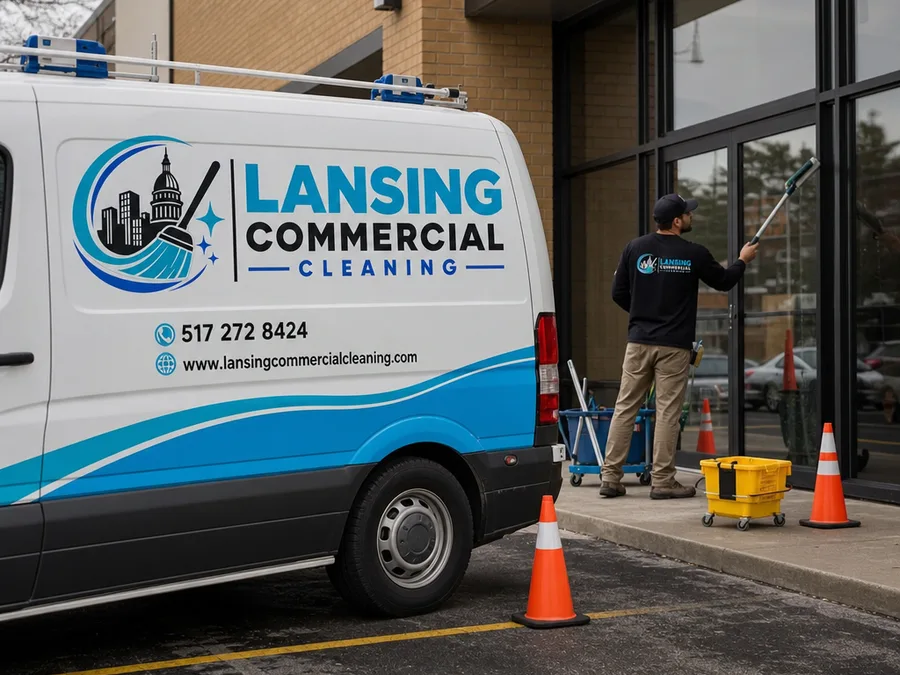
Surfaces And Fittings
What this covers in practice, from overhead detailing, baseboards and floor edges through the rest of the list below, each with the detail that matters on site.
Vent faces, light housings, ledges, door tops and sprinkler escutcheons are cleaned before any lower surface is touched.
The perimeter of each room is hand cleaned, including corners, transitions and the edge soil a mop pushes rather than lifts.
Chair legs, caster wheels, desk undersides, partition tops and shelving are worked individually instead of dusted past.
Grout, dispenser housings, partition hardware, door bottoms and the floor behind fixtures get attention a nightly visit cannot fit.
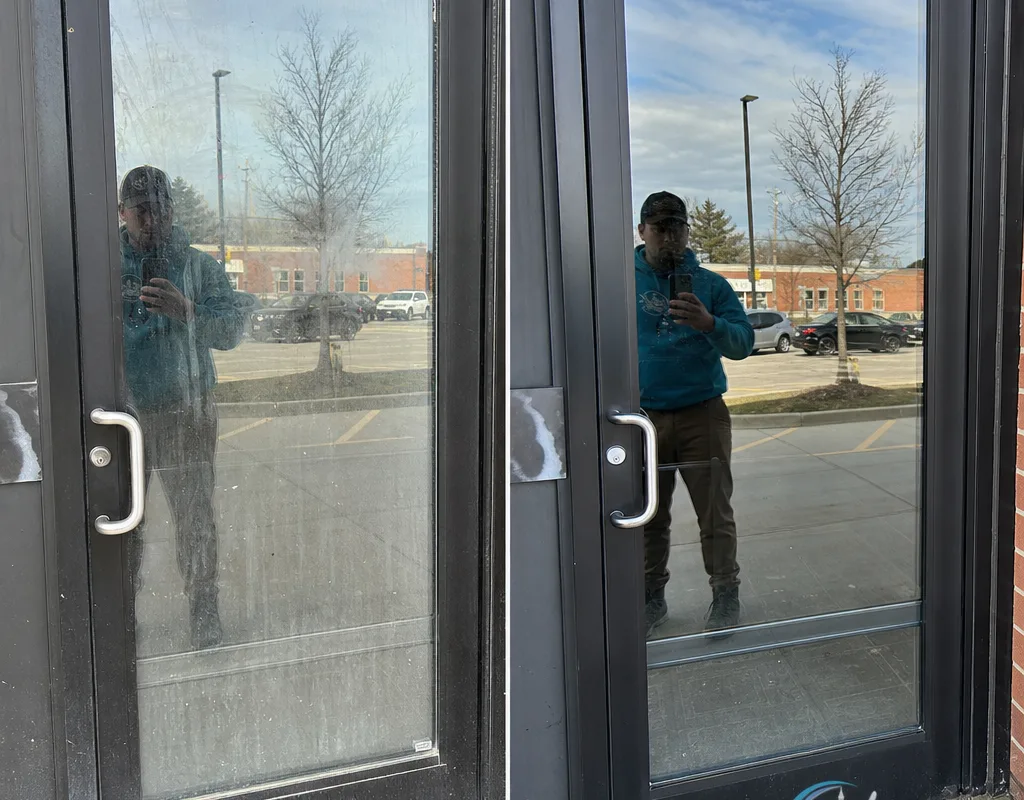
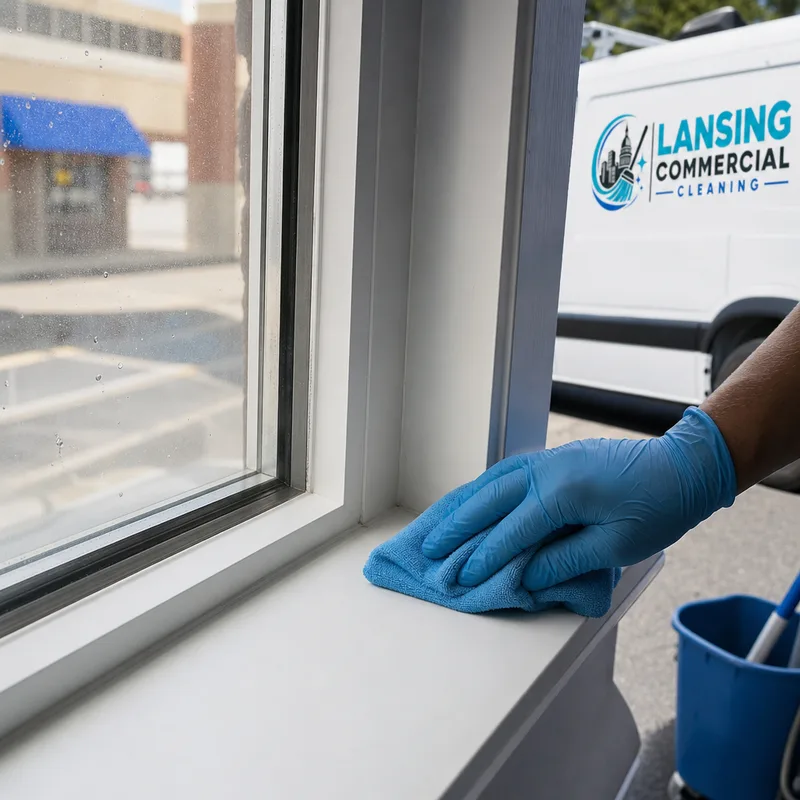
Panes, frames, sills, tracks and blind slats are cleaned, including the inside faces that routine service rarely includes.
Refrigerators, microwaves, cabinet interiors and the gaps behind appliances are emptied, cleaned and put back in order.
You tell us which spaces matter and how far to take each one, and we mark the areas we would prioritize after seeing the building.
Projects land on evenings, weekends or a closed day, since detail work needs rooms empty of people and furniture needs to move.
Crews work ceiling to floor in each room, finishing one space completely before opening the next, so settling dust never lands on finished work.
You see the result room by room while the crew is still on site, and anything you flag is corrected before the project closes.
Rooms And Hours
Neither published visit band fits a reset, since this is a project measured in rooms rather than a schedule measured in visits. Those ranges, roughly $150 to $600+ for a recurring visit and $800 to $2,500+ once scope and access widen, belong to the contracted cleaning running either side of one. Yours answers to how many rooms you include, how deep each goes down the detail list, the gap since the last reset, surface height overhead, restroom and kitchen count, and whether the building empties. A walkthrough fixes the room list, then you get that quote in writing.
Elsewhere In The Range
A reset sits well with the services here, whether that means restoring a floor or holding the result afterward.
A short orientation to this section before the detail below.
Depth And Scheduling
Answers to what buildings ask before they arrange a walkthrough, covering scope, scheduling and how the work gets checked.
Regular service maintains a standard on a short cycle, so it covers what gets touched and seen most often. A deep clean goes after accumulation instead: the overhead, perimeter and behind-the-furniture work that no nightly visit has hours for. One keeps a building steady, the other resets the baseline that routine service then holds.
Not usually, though the rooms being worked do need to be clear. Most projects run after hours, over a weekend or across a few evenings, taking a zone at a time so the rest of the building stays open. Full closure helps mainly in large single-space facilities, where splitting the work into zones would cost more time than it saves.
It tracks traffic and tolerance rather than the calendar. Busy public-facing buildings often run a quarterly rotation, with a different zone taken each quarter, while lower-traffic professional space may hold up on an annual reset. If you are seeing dust on vents and ledges, or grout that no longer responds to mopping, the interval has already stretched too far.
Yes, and partial scopes are common. Restrooms, break rooms, entrances and conference space absorb the most attention and show results fastest, so a project is often built from those alone. Quoting is by room and by depth, which means a short list is worth taking seriously instead of paying for areas that are already holding up.
Plan your service
Phone (517) 272-8424 to arrange a walk of the building, where you set the room list and the depth for each space. The written quote comes back against that list, with scheduling that fits your occupancy.
Tell us about the building and the areas that matter most, and we will arrange a walkthrough and a written scope.
Request a quote
Send the building type, the areas that matter most and your preferred service window, and we will follow up to arrange a walkthrough.