Dining Floors And Edges
Sweeping and damp mopping run across the room, then baseboards and booth bases get hand attention where crumbs collect unseen.
Serving Lansing, Michigan & surrounding areas
Mon–Fri 8am–6pm Sat 9am–2pm
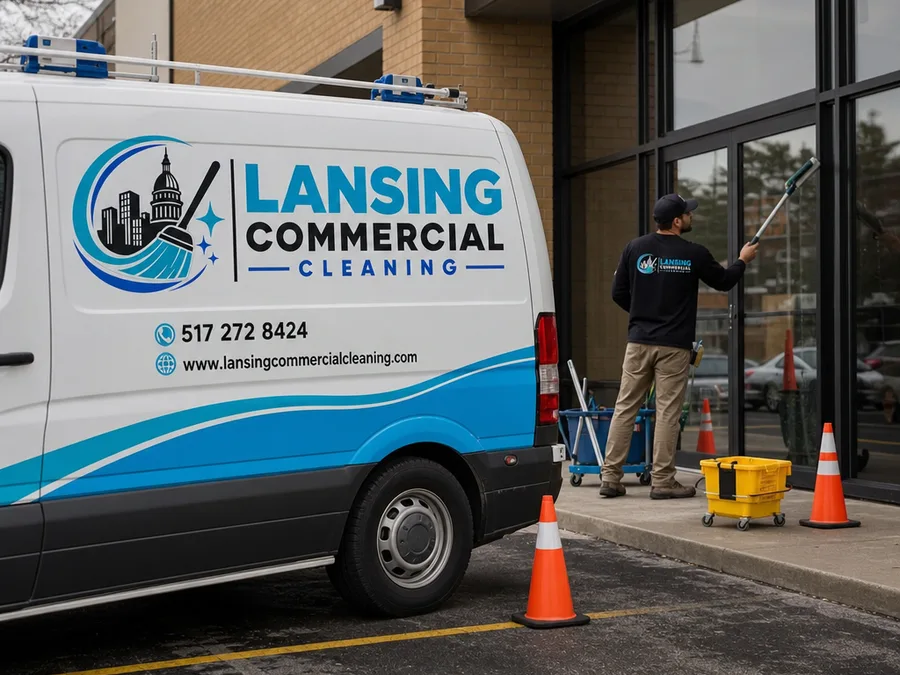
Front And Back
A restaurant soils faster than almost any other commercial building, and most of it is grease that spreads from the line into every room it touches. Lansing Commercial Cleaning works dining rooms, restrooms, entries and the surrounds of kitchen equipment on a schedule fitted to closing time. Our office is at 300 S Hosmer St, Suite 4.
Grease Moves
Airborne grease is the problem that separates a restaurant from an office. It leaves the cook line as vapor, settles on walls, vents, light housings and chair legs, then holds dust and turns a surface sticky rather than dusty. Cleaning that film needs degreasers and dwell time, not a general-purpose spray. Food debris adds a second problem, because crumbs and spills under banquettes and along the kick space feed odor and pests if they sit. Then there is traffic: dining floors take spills, foot grit and salt through a Michigan winter, all on a surface customers look straight at while they eat.
Where Crews Work
Our scope runs through the rooms your guests and staff use rather than the cooking process itself. Dining areas take table bases, booth seating, chair legs, baseboards and the floor edges a mop pushes past. Restroom work covers fittings, dividers, dispensers, door hardware and floors, usually the single biggest driver of a review. Entries and host areas cover glass, mats, handles and the grit that arrives on shoes. Around the kitchen we clean equipment exteriors, stainless surfaces, the floor and the wall behind the line, with hood and duct interiors left to the specialist firms your insurer expects records from. Bar areas, service stations, waste rooms and back corridors finish the list.
Included Each Visit
What this covers in practice, from dining floors and edges, grease film on surfaces through the rest of the list below, each with the detail that matters on site.
Sweeping and damp mopping run across the room, then baseboards and booth bases get hand attention where crumbs collect unseen.
Walls, vents, light housings and the surfaces near the line are worked with a degreaser left on long enough to lift the film instead of smearing it.
Every facility gets its fittings, mirrors, dividers and floor treated on each visit, and paper stocks topped up from whichever supply you prefer.
Table pedestals, chair legs, high chairs and upholstered seams get individual attention, since these are what guests touch and look at closely.
Stainless fronts, handles, cabinet faces and the floor under each unit are covered as far as your kitchen manager wants crews to go.
Bin surrounds, back corridors and the dock area are cleaned and deodorized so odor does not travel back into the dining room.
We look at the building after a service so the soil is visible, then agree what the crew covers and what your own kitchen staff keep.
Entry after close, alarm handling and key arrangements get fixed up front. Early-morning service suits some kitchens better than an overnight crew.
Crews work a fixed task list each visit, taking restrooms and dining floors every time and rotating deeper detail through the week.
Wall washing, vent faces, light housings and seat seams run on a cycle, because the film returns steadily rather than all at once.
A supervisor works down the same list, noting anything a health inspection would reach, such as floor edges, drains and wall junctions near the line.
What It Depends On
Published on this site is a band of about $150 to $600+ per visit for small to mid-size spaces, with area-based work typically running roughly $0.10 to $0.25 per square foot and smaller premises around $200 to $700 per month depending on frequency. A restaurant usually sits toward the upper part of a band for its size, because grease, restroom load and nightly frequency all add labor. Seat count, kitchen footprint, floor type and how many nights a week you need service move it further. The walkthrough settles your scope, and the quote follows in writing.
Where We Travel
We take restaurant work throughout Lansing and the communities around it, including East Lansing, Charlotte, Mason, Grand Ledge and DeWitt. Operating from Suite 4 on South Hosmer Street keeps the drive short, which matters when a kitchen needs a crew on site shortly after close rather than in the small hours. Campus-adjacent dining in East Lansing tends to need heavier entry and restroom attention during term, while a village main street may trade hardest at weekends. Multi-site operators can run one written scope across every location so a manager moving between them finds the same standard and the same checklist.
A short orientation to this section before the detail below.
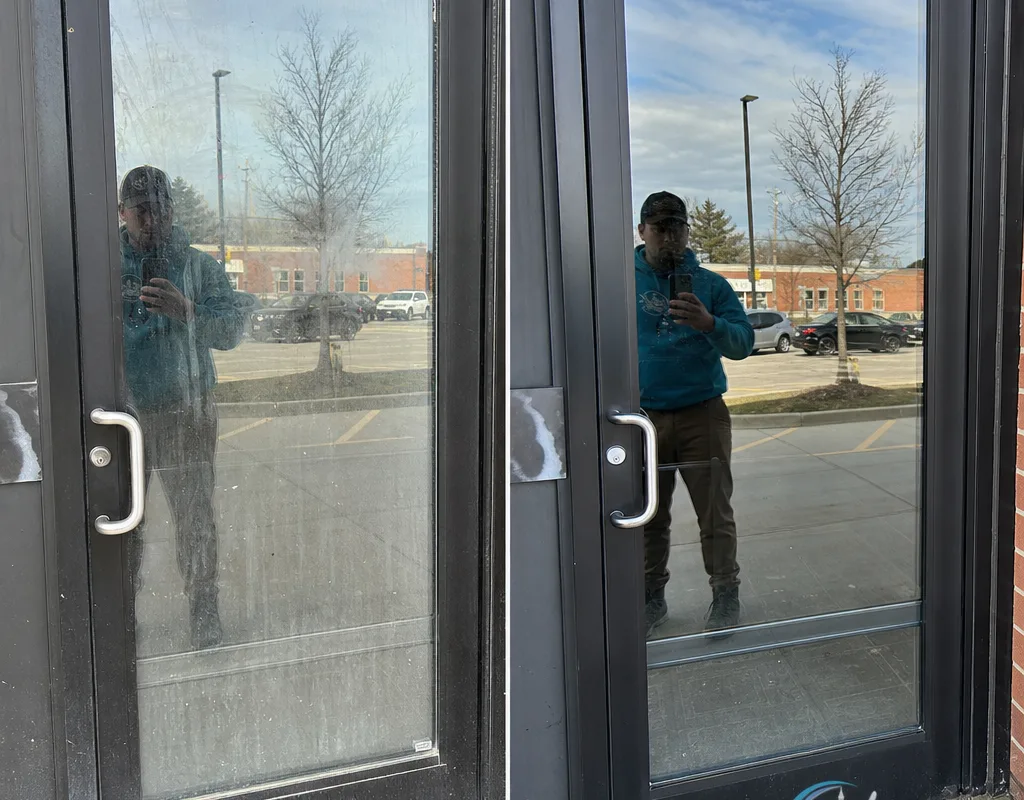
Common Questions
Answers to what buildings ask before they arrange a walkthrough, covering scope, scheduling and how the work gets checked.
Hood and duct interiors are specialist work, usually handled by a hood cleaning firm your insurer or fire inspector expects to see records from. We clean the kitchen around it: equipment exteriors, stainless surfaces, walls, the floor and the grease film that settles well beyond the line itself.
Yes, and most restaurants prefer it. We agree entry, alarm handling and who holds keys before the first visit. Some kitchens would rather we arrive early in the morning, which also works and sometimes suits a late bar close better than an overnight crew.
Grease returns steadily because it travels as vapor, so the answer is a rotation rather than one heavy clean. Walls, vent faces, light housings and seat seams each come up on a cycle, with a degreaser given the dwell time it needs to lift the film instead of spreading it.
A written task list gives you a record of what gets cleaned and how often, and we can build the scope around the areas your own inspections focus on, such as floor edges, drains and wall junctions. The inspection outcome rests with your operation; our part is doing the listed work and logging it.
Bin surrounds, back corridors and the dock get cleaned and deodorized on the same visit, because odor from a waste room travels back through a building faster than most operators expect. Where a bin area needs more frequent attention than the rest of the scope, that goes on the task list separately.
Yes. Outdoor dining changes the scope while it runs, adding railings, patio floors, furniture and a second set of entry glass. We note it as a seasonal addition so the task list reflects the warmer months and returns to the core scope when the patio closes.
Plan your service
Ring (517) 272-8424 and we will walk your dining room and kitchen surrounds after a service, when the real soil is visible. The scope is then written up and costed against what the building showed.
Tell us about the building and the areas that matter most, and we will arrange a walkthrough and a written scope.
Request a quote
Send the building type, the areas that matter most and your preferred service window, and we will follow up to arrange a walkthrough.